


 PLATFORM UPDATE:


An edible microbial cellulose-based triboelectric nanogenerator: a sustainable approach for energy harvesting
 *a
*a
Abstract
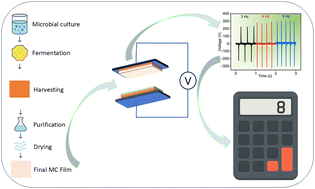
The demand for sustainable energy has been increasing, driving the exploration of novel materials for sustainable energy-harvesting technologies. The present study explores a triboelectric nanogenerator (TENG) based on microbial cellulose (MC), synthesized by symbiotically cultured bacteria and yeast (SCOBY), as a positive triboelectric material, and fluorinated ethylene propylene (FEP) as a negative triboelectric material. The MC film synthesized by a simple fermentation method exhibits very high porosity and a highly rough surface, making it an excellent triboelectric material. The fabricated TENG exhibits an open-circuit voltage (Voc) of ∼620 V, a short-circuit current (Isc) of ∼40 µA, and a power density of 16.5 W m−2 at a 10 MΩ load resistance, demonstrating its superior performance compared to reported bacterial-cellulose-based TENGs. Moreover, the synthesized MC film exhibits efficient antibacterial activity against Gram-negative and Gram-positive bacteria, without the need for an additional antibacterial agent. This study fills a gap in research into clean and green energy harvesting using MC, creating an opportunity for novel, environmentally-friendly TENGs. Practical applications, such as powering a calculator, validate the potential for commercial use of innovative TENG technologies.
 Please wait while we load your content...


