


 PLATFORM UPDATE:


Complexation-driven synthesis of potassium copper ferrocyanide nanoparticles for nonenzymatic glucose detection: an electrochemical and FET-based approach

Abstract
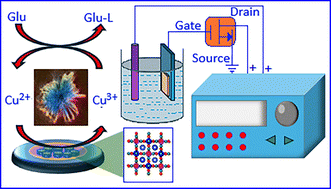
The detection of glucose holds significant importance in clinical medicine, particularly for the diagnosis and management of diabetes. In this study, a complexation-mediated strategy was employed to synthesize nanostructured potassium copper ferrocyanide (PCFC) nanoparticles within the size range of 2 to 5 nm, which were subsequently investigated for their potential application in non-enzymatic electrochemical and field-effect transistor-based glucose sensing platforms. Key performance metrics of the sensor, including sensitivity, detection limit, linear response range, response time and selectivity towards glucose in an alkaline electrolyte medium, were systematically investigated. Electrochemical measurements, utilizing cyclic voltammetry (CV) and differential pulse voltammetry (DPV), confirmed the electrocatalytic activity of the synthesized material for glucose oxidation, primarily attributed to the crucial role of the Cu2+/Cu3+ redox couple. The CV and DPV techniques yielded sensitivities of 0.41 mA mM−1 cm−2 and 0.50 mA mM−1 cm −2, with limits of detection of 1.09 mM and 1.01 mM, respectively. Application of potassium copper ferrocyanide within an extended gate-field effect transistor architecture showed promising glucose sensing performance, as evidenced by linear shifts in transfer characteristics and effective modulation of drain current upon glucose addition, with the sensitivity and limit-of-detection values of 0.033 mA mM−1 cm−2 and 0.28 mM, respectively. The sensor exhibited good sensitivity, a low detection limit and excellent selectivity in the presence of common biological interferents. The practical applicability of the transistor-based sensor was also demonstrated through real-sample analysis, which showed high accuracy and repeatability, suggesting its potential for practical biomedical and clinical diagnostic applications.
- This article is part of the themed collection: Organic Transistors and related devices
 Please wait while we load your content...


