


 PLATFORM UPDATE:


Engineering 3D-printed standalone conductive nerve guides using soft bioinks for peripheral nerve injuries
 *ab
*ab
Abstract
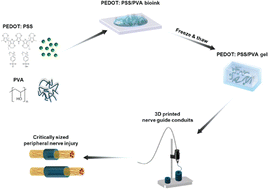
Conductive nerve guides (CNGs) demonstrate significant regenerative capabilities for bridging critically sized nerve defects due to their unique electrical and mechanical characteristics. However, nerve guides fabricated from conducting polymers through conventional electrochemical methods present challenges, including non-biodegradability and limited customization potential. Here we demonstrate customizable 3D-printed CNGs fabricated using biocompatible bioinks composed of poly(3,4-ethylenedioxythiophene):polystyrene sulfonate (PEDOT:PSS) and polyvinyl alcohol (PVA) without the need for sacrificial support. The synthesized soft bioinks composed of PEDOT:PSS/20% PVA showed enhanced conductivity, wettability, and shear-thinning behavior. By tailoring the polymer concentration and polymerization conditions, the standalone CNGs, fabricated using extrusion-based 3D printing, were custom-made to match the dimensions of critically sized nerve defects in rodent PNI models. The elimination of sacrificial layers during 3D printing avoids complex post-processing material removal and potential residue-related cytotoxicity. As a result, the 3D-printed CNGs demonstrated excellent biodegradability and biocompatibility. Optimizing soft bioink properties offers a simple manufacturing approach for producing 3D-printed biodegradable and biocompatible CNGs with customizable dimensions. Our findings address the critical need for advanced nerve guide designs tailored to treat peripheral nerve injuries of varying defect sizes.
- This article is part of the themed collection: Celebrating International Women’s Day 2026: Women in Materials Advances
 Please wait while we load your content...


