


 PLATFORM UPDATE:


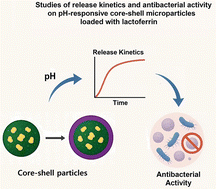
Studies of release kinetics and antibacterial activity on pH-responsive core–shell microparticles loaded with lactoferrin
 †ab
Michela
Salamone,
†c
Simona
Zuppolini,
*a
Aldobenedetto
Zotti,
a
Rosa
Vitiello,
b
C. Valeria L.
Giosafatto,
b
†ab
Michela
Salamone,
†c
Simona
Zuppolini,
*a
Aldobenedetto
Zotti,
a
Rosa
Vitiello,
b
C. Valeria L.
Giosafatto,
b
Abstract
Innovative delivery platforms based on biopolymer matrices are attracting increasing interest as effective tools to enhance the protection, solubility, and therapeutic outcome of sensitive bioactive compounds and macromolecules. This research focuses on the formulation and study of multilayered microsystems composed of naturally occurring polymers – specifically, alginate and chitosan – designed to encapsulate and gradually release lactoferrin, a multifunctional iron-binding glycoprotein with potent antimicrobial properties. Particularly, the iron-free lactoferrin form (apo-lactoferrin) plays a key role in the innate immune defense by exerting antimicrobial activity through two primary mechanisms: bacteriostatic and bactericidal. Lactoferrin-loaded microspheres were produced using a gentle ionic gelation technique and subsequently coated with a positively charged chitosan layer to maintain protein stability and regulate its release. Detailed morphological, thermal and physicochemical characterization studies were performed, along with release kinetics studies under various pH conditions. Additionally, the antimicrobial activity of the system was tested against clinically relevant bacterial strains, including S. aureus, P. aeruginosa and E. coli, at variable proton concentrations. The results showed that this core–shell platform enhances protein stability and selectively increases the antimicrobial efficacy under different pH conditions, demonstrating its potential for targeted intervention in infection-prone tissues with altered pH profiles. These findings suggest promising applications in pH-responsive topical treatments, particularly for managing chronic wounds and infection-prone tissues, where local pH alterations influence antimicrobial efficacy.
 Please wait while we load your content...


