


 PLATFORM UPDATE:


Revisiting bimodal cancer phototherapy with immunogenicity via galvanically-driven hollow Pd–As nanoshells

Abstract
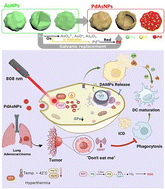
Most cases of lung cancer are non-small cell lung cancer (NSCLC), and because there are still tumor tissues near the treatment margins, it is challenging to completely eradicate the cancer and prevent metastasis and recurrence. The application of tumor phototherapy, including photodynamic therapy (PDT) and photothermal therapy (PTT), has been considered an effective strategy for achieving significant immunogenic cell death (ICD) at optimal tumor retention. Arsenic (As) is recognized as toxic to both the environment and human health. However, historically, arsenic was employed in medicine for the treatment of syphilis and psoriasis and served as a standard remedy for blood diseases such as anaemia and subsequently leukaemia. It can have its toxicity mitigated through engineering with other non-toxic metals, such as palladium (Pd), thereby facilitating safer, localized therapeutic applications. In this study, novel arsenic nanoparticles (NPs) with rough surface morphology were transformed into hollow Pd–As nanoshells (PdAsNPs) via an optimized galvanic replacement reaction. The NPs generated heat and singlet oxygen upon irradiation with an 808-nm near-infrared laser owing to the presence of Pd. PdAsNPs not only showed biocompatibility with normal lung cells but also induced hyperthermia and generated reactive oxygen species in A549 human lung cancer cells, thus demonstrating their potential for combined photothermal and photodynamic therapy. Laser-irradiated PdAsNPs also increased the expression of antioxidant genes in cancer cells. This combination therapy amplifies immunogenic cell death by releasing damage-associated molecular patterns, such as HMGB1 and CRT, while preventing the immune escape protein CD47. Our bimodal photo-triggered combination therapy demonstrated synergistic anticancer activity at safe doses for potential practical applications.
- This article is part of the themed collection: Celebrating International Women’s Day 2026: Women in Materials Advances
 Please wait while we load your content...


