


 PLATFORM UPDATE:


Synthesis of a hybrid material based on a high-surface-area magnetic Fe3O4@TiO2 core–shell structure and immobilized Ni–PNP aliphatic pincer complex: study of the structural, magnetic, and antibacterial properties and nonenzymatic electrochemical sensing of glucose

Abstract
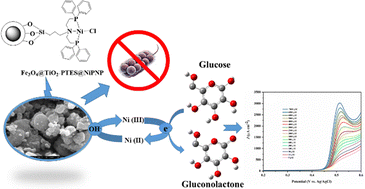
The present study reports a multistep synthesis of a hybrid material based on a Fe3O4@TiO2 core–shell with an immobilized aliphatic nickel–PNP pincer complex. The Fe3O4@TiO2 core–shell structure was obtained using an in situ method based on a controllable one-pot synthesis of TiO2 on the surface of the Fe3O4 core. The hydrolysis of the molecular precursor titanium(IV) ethoxide was carried out by reaction in a mixture of ethanol, acetic acid, and water with a mole ratio of 1 : 25 : 0.1 : 4 at reflux temperature, leading to a high surface area core structure with an amorphous shell. The formation of the material and the immobilization of the complex were confirmed by FT-IR spectroscopy, XRD, FE-SEM, TEM, TGA, DSC, CHN analysis, and XPS. The amount of the immobilized nickel complex was quantified using ICP/OES analysis. The properties of the hybrid material were further investigated using UV-Vis (DRS), VSM, and argon sorption analyses. The antibacterial properties of the material were evaluated against two pathogenic strains of Staphylococcus aureus and Escherichia coli bacteria using the agar well-diffusion method. The largest inhibition effect was observed against Staphylococcus aureus (19 mm) by the immobilized nickel–PNP pincer complex, indicating the excellent ability of this compound to be utilized as an antibacterial agent against pathogenic strains. Furthermore, the immobilized aliphatic nickel–PNP pincer complex was used as a modified electrode for nonenzymatic glucose sensing using cyclic voltammetry (CV) and differential pulse voltammetry (DPV) methods. The modified electrode with Nafion exhibited linear ranges of 5 µM–0.1 mM and 0.1–7 mM with high sensitivities of 3692 and 276 µA mM−1.cm−2, respectively, with a low detection limit of 0.894 µM (S/N = 3) in an alkaline medium for glucose determination. The results from the nonenzymatic glucose detection experiments demonstrate that the Fe3O4@TiO2-PTES@NiPNP/GCE is a suitable candidate for glucose quantification.
 Please wait while we load your content...


