


 PLATFORM UPDATE:

Recycling PVC waste into a functional adsorbent for dye removal: an eco-friendly approach
 a
Sharmeen
Nishat
*a
a
Sharmeen
Nishat
*a
Abstract
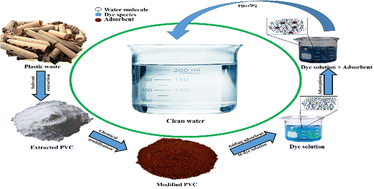
Environmental pollution caused by the improper discharge of toxic dyes from industries has become a major concern nowadays in developing countries. A facile route was explored to develop a new cost-effective, modified waste material-based adsorbent. Plastic solid wastes, such as waste PVC pipes, were processed and converted into a functional material, which was applied in dye removal technology. PVC was separated from the plastic waste with an extraction yield of 78%. The isolated PVC was modified functionally by treating it with ethylenediamine. Characterization of the product by elemental analysis, XPS, and FT-IR techniques confirmed the formation of aminated PVC (APVC). A series of adsorption batch experiments were carried out by APVC to remove methylene blue (MB) dye from solutions. The MB removal efficiency was optimized by varying different experimental parameters including solution pH, contact time, dye concentration, adsorbent dose, and temperature. An adsorption capacity of 10.45 mg g−1 with 52.25% of MB removal was recorded under optimized conditions (pH 10, contact time of 11 hours, dye concentration of 20 ppm, adsorbent dose of 10 mg/10 mL, and temperature of 30 °C). The experimental data best fitted with the Langmuir isotherm (R2 = 0.9699) and followed pseudo second-order kinetics (R2 = 0.9914). Evaluation of different thermodynamic parameters (negative ΔG°, ΔH° = 9.7524 kJ mol−1, and ΔS° = 33.5474 J K−1 mol−1) demonstrated the spontaneous and endothermic nature of the MB adsorption process on APVC. These results reveal a new avenue for plastic solid waste management by recycling and modifying PVC waste into valuable functional materials that work as potential adsorbents for the efficient removal of dyes from wastewater systems.
 Please wait while we load your content...


