


 PLATFORM UPDATE:


Redox-responsive photo-polymerizable PEG-based hydrogels: diverse functionalization, 3D-printing, and on-demand degradation for protein release
Abstract
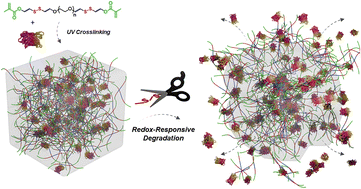
Recent years have seen an ever-increasing utilization of redox-responsive polymeric materials for various biomedical applications. In this regard, the photopolymerization of poly(ethylene glycol) (PEG) polymers has been extensively explored for the fabrication of bulk and 3D-printed hydrogels, with applications in therapeutic and diagnostic uses. Herein, disulfide-containing PEG-based crosslinkers are obtained using a modular approach from commercially available linear PEGs and are used to produce redox-responsive bulk and 3D-printed gels that can encapsulate proteins and release them on demand under reducing conditions. Additionally, partial degradation of the disulfide linkages enables facile functionalization via thiol-maleimide and thiol-disulfide exchange chemistry, as demonstrated by reversible and irreversible attachment of fluorescent dyes. Furthermore, the obtained hydrogels and their degradation products exhibit high cytocompatibility, as evidenced by cytotoxicity and live/dead assays with cultured fibroblast cells. One can envision that this operationally simple approach to fabricating versatile redox-responsive hydrogels would enable its adaptation in various areas of biomedical sciences.
 Please wait while we load your content...


