


 PLATFORM UPDATE:


Systematic investigation of urea containing sidechains in electrochromic ProDOT and EDOT copolymers

Abstract
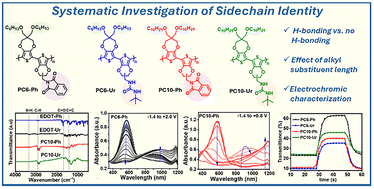
Strategies for the sidechain engineering of conjugated polymers have advanced to include H-bonding functional groups, such as amides, carbamates, and amino acid derivatives, enabling new capabilities in emerging organic electronic device technologies. However, this has been limited to secondary amides and carbamates with limited examples of urea functional groups. Here, the systematic investigation of both the alkyl substituent and the inclusion of a H-bonding urea functional group is reported for a series of 3,4-propylenedioxythiophene (ProDOT) and 3,4-ethylenedioxythiophene (EDOT) copolymers to determine how both modification of the alkyl substituent on ProDOT [hexyloxy (C6) or decyloxy (C10)] and the functional group on EDOT [phthalimide (Ph) or urea (Ur)] alters the optical, electrochemical, and electrochromic properties. The polymers (PC6-Ph, PC6-Ur, PC10-Ph, and PC10-Ur) were synthesized via direct arylation polymerization, and fully characterized via ATR-FTIR, high-temperature NMR, MALDI-TOF, DSC, TGA, AFM, and SEM. ATR-FTIR, NMR, and MALDI-TOF revealed the desired functional groups were retained in the polymer. It was found that the optical and electrochemical properties showed a greater dependence on the pendant substituent identity (phthalimide or urea) rather than the alkyl substituent. Electrochromic characterization revealed a dependence on both the alkyl substituent and functional group identity where proper pairing could yield a 50% reduction in switching time and desirable coloration efficiencies (up to 93 cm2 C−1). Overall, these findings provide a comprehensive analysis of both the role of the alkyl substituent identity and the inclusion of a urea functional group guiding the future molecular design of electrochromic polymers.
 Please wait while we load your content...


