


 PLATFORM UPDATE:


Tandem CO2 valorisation to polycarbonate vitrimer and ethylene carbonate

Abstract
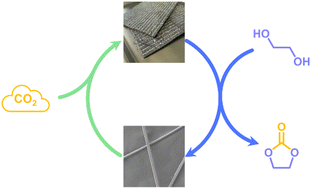
The need for renewably sourced polymers has intensified with the worsening of global challenges such as emissions and plastic pollution. Here, we report a CO2-based poly(cyclohexene carbonate) (PCHC) vitrimer cured with zinc stearate that directly addresses both issues. Enhanced zinc dispersion within the network enabled faster curing and reprocessing than possible with zinc acetate systems, while maintaining consistent Tg and mechanical integrity across multiple cycles. The vitrimer undergoes rapid glycolysis in ethylene glycol, valorisation into ethylene carbonate with up to 97% yield without additional catalyst. When applied to carbon fibre-reinforced polymers (CFRPs), applying this strategy enabled the development of sustainable CO2-based CFRP that can undergo full resin valorisation and recovery of clean, damage-free fibres. Collectively, this tandem CO2 valorisation strategy—from vitrimer synthesis to fibre-reinforced composites and subsequent chemical valorisation—establishes multiple recycling and valorisation pathways and provides a promising routte for carbon capture and utilization as well as material recycling.
- This article is part of the themed collections: Young Investigator Honorees of the ACS Polymeric Materials: Science and Engineering (PMSE) Division., RSC Applied Polymers Advisory Board, Sustainable Development Goal 12: Responsible Production and Consumption and RSC Applied Polymers Emerging Investigators 2025
 Please wait while we load your content...


