


 PLATFORM UPDATE:


Recyclable and eco-compatible polymer composite nanofibers for broad-spectrum dye remediation

Abstract
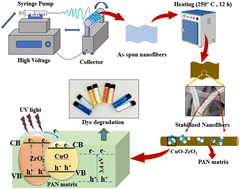
Photocatalytic nanoparticles (NPs) can be effective in degrading synthetic dyes, but their practical application is often limited by challenges in handling, recovery and recycling, leading to catalyst loss during use. In this study, firstly, CuO–ZrO2 hybrid nanoparticles were synthesised using a facile co-precipitation method at pH 7 and incorporated into the polyacrylonitrile (PAN) polymer at 20, 40, and 60 wt% loadings, followed by electrospinning and thermal stabilization (250 °C, 12 h) to obtain novel recyclable CuO–ZrO2@PAN composite nanofiber mats. To the best of our knowledge, this is the first report on the fabrication and application of electrospun PAN nanofibers incorporating CuO–ZrO2 hybrid nanoparticles. Among these, the 40 wt% CuO–ZrO2@PAN sample exhibited the highest photocatalytic performance. The optimized composite demonstrated broad-spectrum activity against structurally distinct azo and thiazine dyes (25 ppm), achieving >96% removal of Methylene Blue, ∼90% of Congo Red, ∼85% of Bismarck Brown, and ∼75% of Reactive Black within 60 minutes under irradiation. SEM-EDS analysis confirmed uniform nanoparticle immobilization within the fiber matrix, enabling facile recovery and reuse. Seed germination assays on Vigna radiata seeds further validated the eco-compatibility of the synthesised nanofibers, indicating no phytotoxicity effects up to 75 ppm. These results identify CuO–ZrO2@PAN nanofibers as a durable, recyclable and environmentally safe photoactive filter system for dye contaminated wastewater treatment.
- This article is part of the themed collection: Sustainable Development Goal 12: Responsible Production and Consumption
 Please wait while we load your content...


