


 PLATFORM UPDATE:


Solar light driven type-II heterojunction TiO2@ZIF-8 nanocomposite for sustainable chlorpyrifos detoxification: physicochemical insights, mineralization pathways and antibacterial performance

Abstract
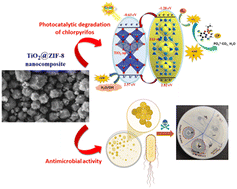
Chlorpyrifos (CP), a persistent organophosphate pesticide, poses significant environmental and health risks, which necessitate sustainable detoxification strategies. TiO2@ZIF-8 nanocomposite was prepared by a combined hydrothermal–ultrasonication approach and characterized using XRD, FTIR spectroscopy, Raman, XPS, FE-SEM, HR-TEM, BET, DRS, and DLS analyses and TGA to gain insights into its structural characteristics. Moreover, the interfacial charge separation was further confirmed through Mott–Schottky and EIS measurements. Photocatalytic degradation studies showed that ∼90% of CP (100 mg L−1) was removed within 90 min under solar light using 0.6 g L−1 of the catalyst. RSM–CCD optimisation resulted in 86% CP degradation at 90 mg L−1 of CP, 20 mg of adsorbent, and 86 min of solar light. A band energy diagram was constructed based on Tauc plot and Mott–Schottky analyses to determine the VB and CB positions of ZIF-8, TiO2, and TiO2@ZIF-8, indicating the probable formation of a type-II heterojunction, which facilitated efficient charge-carrier separation, broadened the light-absorption range, and suppressed electron–hole recombination. The kinetic analysis revealed that the degradation process followed pseudo-first-order kinetics. Radical scavenging study confirmed that holes, superoxide radicals, and hydroxyl radicals were the preferentially active reactive species in the system. A plausible degradation mechanism was proposed accordingly. The composite exhibited excellent reusability by maintaining ∼85% activity over four cycles. The nanocomposite demonstrated significant antibacterial efficacy against Staphylococcus aureus and Escherichia coli, suggesting multifunctional applicability in water purification. These results demonstrate that the TiO2@ZIF-8 nanocomposite possesses both photocatalytic and antibacterial capabilities independently, enabling its potential for multifunctional applications in the future.
 Please wait while we load your content...


