


 PLATFORM UPDATE:


Stretchable mesoporous electrodes as a versatile platform for minimally invasive surgical devices

Abstract
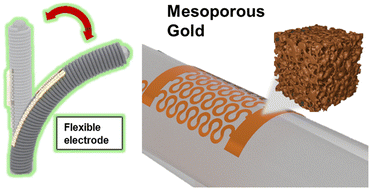
Minimally invasive surgery (MIS) is a vital procedure for the treatment of several cardiac and neural diseases, such as clearing clogged arteries, pacing irregular heartbeats, monitoring intracranial pressure, and draining excess cerebrospinal fluid from the brain. Recent research advances in soft electronics demonstrate the potential of integrated electrodes in enhancing MIS performance, enabling in situ biopotential measurement, electrical stimulation, and bioimpedance sensing. The addition of these modalities expands the potential of MIS to deliver targeted cardiac interventions or further minimize risks through brain activity monitoring during the procedure. Existing sensor-integrated catheters still exhibit several drawbacks, such as a sizable increase in catheter profile, inconsistent electrode performance, limited fabrication scalability, and a lack of active steering capability. We report here the development of flexible electrodes using mesoporous gold as a functional layer with enhanced surface impedance characteristics for recording, high charge injection capacity for stimulation, and mechanical compliance for integration into a wide range of MIS tools with varied diameters. Integrating the electrode into a soft robotic catheter driven by an embedded microfluidic channel and microtubing demonstrates a manoeuvrable system with electrical and mechanical stability under various bending conditions, together with a low system profile suitable for a minimally invasive procedure. Through a set of ex vivo and in vitro experiments, we demonstrate the potential of our system for various biomedical applications, including field potential measurement, bioimpedance sensing, and cardiac pacing, that can leverage the capability of MIS procedures.
- This article is part of the themed collection: Microfluidics for Wearable and Implantable Technologies
 Please wait while we load your content...


