


 PLATFORM UPDATE:


Predicting human pharmacokinetic parameters of drugs using a multi-tissue chip platform integrating liver, kidney, and skeletal muscle microphysiological systems

Abstract
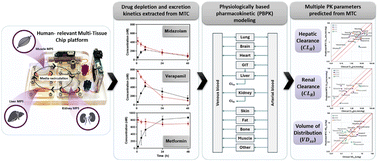
Accurate prediction of human pharmacokinetic (PK) parameters is a critical step in drug development. While simple in vitro assays provide insight into discrete metabolic processes, they cannot recapitulate the complex multi-organ interactions that involve absorption, distribution, metabolism, and excretion (ADME) processes. This limitation has perpetuated a heavy reliance on animal experimentation to predict integrated outcomes like hepatic and renal clearance in humans. In this study, we developed a multi-tissue chip (MTC) to evaluate the PK parameters of intravenously (IV) administered drugs. The MTC platform provides continuous oxygenation through media recirculation and interconnects three MPSs (liver, kidney, skeletal muscle) to study drug metabolism, excretion and distribution within a single in vitro system. The functionality of each MPS was characterized for more than 15 days with single- and multi-tissue chips. A diverse set of drugs from all extended clearance classification system (ECCS) classes with various clearance mechanisms was evaluated on the MTCs and on-chip PK parameters were evaluated, such as hepatic metabolism, uptake, and disposition, tubular secretion and reabsorption, and muscle distribution. These PK parameters were successfully correlated to clinical parameters for IV drugs: hepatic clearance (CLH), renal clearance (CLR), volume of distribution (VD) and then these parameters were extrapolated to human drug exposures using physiologically based pharmacokinetic (PBPK) modeling. This study demonstrated that the MTC platform could deliver accurate predictions for clinical pharmacokinetics of intravenously administered small molecules without the need for animal studies.
- This article is part of the themed collection: Breakthrough Technologies and Applications in Organ-On-a-Chip
 Please wait while we load your content...


