


 PLATFORM UPDATE:


Microfluidic well plates integrated with passive nematode culture chambers for multiplexed chemical toxicity assays in C. elegans

Abstract
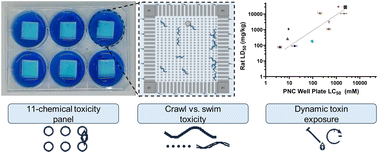
Whole-organism toxicity assays are essential for evaluating the safety of chemicals, but mammalian models remain costly and low throughput, contributing to a global backlog of untested chemicals. The micro-organism C. elegans has emerged as one of the new approach methodologies (NAMs) modelling toxicological responses across multiple interacting tissues, with advantages of human-relevant biology and cost-effectiveness. However, existing technologies for C. elegans toxicity testing are limited by poor compatibility with long-term chemical exposure, lack of multiplexibility, and inability to dynamically modulate chemical exposure over time. Here, we present a novel microfluidic platform, passive nematode culture chambers (PNCs) integrated into well plates – where micropillar arenas housing crawling or swimming C. elegans have fluid communication with the surrounding medium, enabling consistent nutrient access and long-term viability. These integrated well plates allow multiplexed assays and high-quality imaging due to worm motion being restricted to two-dimensions. We demonstrate the utility of these microfluidic well plates for whole-organism lethality assays. Dose–response studies were conducted with 11 chemicals, revealing median lethal concentrations (LC50s) consistent with values obtained in existing liquid culture and microfluidic systems. The LC50 values from PNC well plates showed strong concordance with median lethal dose data from rats (Spearman correlation, r = 0.827), suggesting that the platform is informative for comparative toxicity ranking. We demonstrate the uniqueness of the PNC well plates by (i) incorporating arenas of varied micropillar spacing and showing that crawling and swimming worms respond differently to heavy metal toxicity due to differences in toxin uptake, (ii) conducting dynamic exposure studies using cadmium chloride (CdCl2), uncovering distinct temporal toxicity patterns and distinguishing between interrupted and chronic exposure insights that would be difficult to obtain using conventional technologies. These findings establish PNC microfluidic well plates as a robust platform for C. elegans-based toxicology. Beyond their immediate application in chemical safety assessment, PNC well plates also enable new experimental directions where minimal intervention, multi-day viability, and scalability are critical.
 Please wait while we load your content...


