


 PLATFORM UPDATE:


Realization of rapid diabetic retinopathy screening with lipocalin 1 in tear using enhanced immunofluorescence photonic crystal microchip

Abstract
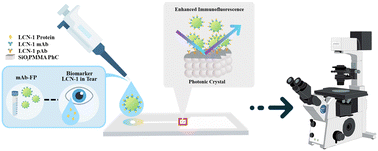
Diabetic retinopathy (DR) is a major cause of preventable blindness, but current diagnostic tools rely on expensive imaging devices, specialized expertise, and, in some cases, invasive procedures, limiting accessibility in resource-constrained settings. There is an unmet need for rapid, non-invasive, and affordable point-of-care methods for early DR detection. We developed a portable lateral flow microfluidic chip integrated with a photonic crystal (PhC) biosensor to enhance immunofluorescence detection of lipocalin-1 (LCN-1), a biomarker associated with DR. The PhC surface provided a 2.7-fold fluorescence enhancement compared to non-PhC substrates, and the microfluidic flow was optimized using an absorbent paper design to ensure uniform fluid distribution and sufficient antigen–antibody interaction time. Analytical performance was validated using sandwiched immunoassays with carboxylate-modified particles, followed by clinical evaluation in 30 tear samples from healthy individuals, non-proliferative DR (NPDR), and proliferative DR (PDR) patients. The PhC microchip achieved a detection limit of 136 pg μL−1 and delivered quantifiable results within 15 min. In clinical testing, elevated LCN-1 levels were observed in both NPDR and PDR patients compared with healthy controls. The biosensor achieved 100% sensitivity, specificity, and accuracy in distinguishing PDR from healthy individuals, as well as 100% sensitivity with 90% specificity for NPDR versus healthy individuals, resulting in an overall diagnostic accuracy of 95%. The PhC-integrated microchip enables rapid and non-invasive detection of DR from tear samples. Its high sensitivity, specificity, and capability to differentiate between NPDR and PDR demonstrate strong potential for future adaptation into a portable point-of-care screening platform, particularly suited for low-resource settings to facilitate early intervention and reduce vision loss in diabetic patients.
 Please wait while we load your content...


