


 PLATFORM UPDATE:


Advancing liquid biopsy: whispering gallery mode laser detection of the HER2 cancer biomarker on extracellular vesicles

Abstract
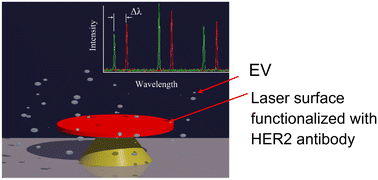
The search for new technologies to reliably detect biomarkers in body fluids has become critical for the integration of liquid biopsy into routine diagnostics. Among the most important applications is the need for effective monitoring of therapy response and early detection of emerging resistance. However, the availability of robust and quantitative tools for measuring biomarkers in body fluids remains limited. HER2, the epidermal growth factor receptor-2, is of significant importance as a predictive biomarker and therapeutic target, not only in breast cancer, but also in colorectal, gastric, prostate and other malignancies. Tumors that express HER2 are susceptible to HER2-targeted therapies, which include inhibitory antibodies such as trastuzumab and pertuzumab, as well as small inhibitor molecules such as lapatinib and tucatinib. Despite the success of these treatments, more than 20% of patients develop resistance. The most common mechanisms of resistance are either cleavage of HER2 leading to the formation of an intracellular, constitutively active, ligand-independent p95HER2 protein and its extracellular p105HER2 counterpart, or the formation of HER2/HER3 heterodimers. Current clinical diagnostics are primarily limited to detecting HER2 in tissue biopsies, which cannot be routinely performed during treatment due to the invasive nature and high patient burden of tissue sampling. Additionally, while soluble p95HER2 protein can be measured in patient serum using conventional ELISA, this method lacks robust prognostic value. The detection of full-length HER2 in the form of homo- and heterodimers is still lacking and could be a key element in establishing liquid biopsy-based HER2 therapy monitoring. In this manuscript, we propose a novel approach using whispering gallery mode (WGM) lasers as a reliable method to specifically detect full-length HER2 proteins associated with extracellular vesicles (EVs) released into the circulation. We have successfully established a detection limit of 107 vesicles per mL, approximately equivalent to 10 μL of human plasma or serum. Moreover, our detection technology can discriminate between soluble HER2 and membrane-bound HER2, enabling precise identification of the latter. This advancement opens up the possibility of introducing HER2 detection as a highly accurate and quantitative liquid biopsy method for detecting HER2 in blood, in full-length forms, offering new avenues for non-invasive diagnostics, patients monitoring, and early prediction of therapy.
 Please wait while we load your content...


