


 PLATFORM UPDATE:


Blood microfluidics: progress and challenges

Abstract
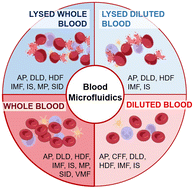
Microfluidic technologies have significantly advanced whole blood analysis by enabling precise, rapid, and cost-effective diagnostic solutions. These platforms have made significant progress in overcoming longstanding challenges such as clogging caused by red blood cells (RBCs), white blood cells (WBCs), and platelets, as well as managing the non-Newtonian viscosity of blood, which affects flow stability and device performance. The direct processing of undiluted whole blood has enabled the isolation of rare cells such as circulating tumor cells (CTCs) with recovery rates of approaching 90%, and leukocyte depletion efficiencies of 80%. Material selection and sterilization compatibility are equally critical to ensure consistent device performance, biocompatibility, and reproducibility. This review examines recent developments in microfluidic processing of blood, and categorizes them into four preparation types: whole blood, lysed whole blood, diluted blood, and lysed diluted blood. This framework highlights the distinct biochemical and physical challenges of each type and provides a structured basis for evaluating how microfluidic strategies are optimized for specific diagnostic context. Recent advances are driving the development of AI-based flow control, rapid 3D-printed microfluidic fabrication, and integrated platforms that merge cell separation with imaging to improve diagnostic performance and access.
- This article is part of the themed collection: Lab on a Chip Review Articles 2026
 Please wait while we load your content...


