


 PLATFORM UPDATE:

An in situ pre-concentration method of mercury based on solid phase extraction technology and its application in seawater mercury isotope analysis

Abstract
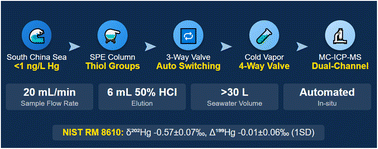
This study developed an in situ pre-enrichment method based on solid-phase extraction technology for the efficient enrichment and isotope analysis of ultra-low concentration dissolved mercury (<1 ng L−1) in seawater. By optimizing key parameters such as sample flow rate (20 mL min−1), eluent volume (6 mL), and concentration (50% hydrochloric acid), and by incorporating an improved cold vapor generator and four-way valve design, the method significantly enhanced mercury recovery and isotope analysis efficiency. Method validation showed that the δ202Hg (−0.57 ± 0.07‰, 1SD) and Δ199Hg (−0.01 ± 0.06‰, 1SD) measurements of the NIST RM 8610 standard material were highly consistent with literature values, confirming that the pretreatment process did not introduce significant isotope fractionation. The method was applied to seawater samples in the central South China Sea, revealing an overall pattern of dissolved mercury isotope composition: negative δ202Hg and slightly positive Δ199Hg, reflecting the combined effects of photochemical reduction and biological processes. The strong light environment in the low-latitude South China Sea results in higher Δ199Hg values in seawater. Additionally, the negative correlation between δ202Hg and 1/Hg might reflect the differential contributions of terrestrial input and atmospheric deposition. However, given the complexity of Hg isotope fractionation and the current limitations in characterizing endmember isotopic compositions, this interpretation remains preliminary and highlights an area for future research. This study provides a highly sensitive analytical method for studying the marine mercury cycle and offers new isotope evidence for understanding the biogeochemical behavior of mercury.
 Please wait while we load your content...


