


 PLATFORM UPDATE:

Polyvinyl chloride microplastic detection by single particle inductively coupled plasma mass spectrometry for the characterization of model microplastics

Abstract
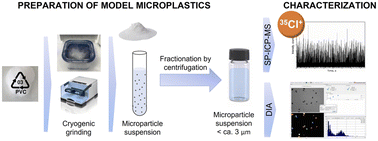
Methodology based on the use of single particle inductively coupled plasma mass spectrometry (SP-ICP-MS) for the detection and quantification of polyvinyl chloride (PVC) micro/nanoplastics was developed. The use of chlorine as an intrinsic element present in the composition of the polymer improved the performance of SP-ICP-MS reported in the literature, allowing the detection of PVC particles down to 0.35 µm, by monitoring the 35Cl isotope using a quadrupole-based instrument. A top-down protocol for preparation of microplastic suspensions based on cryogenic grinding of the raw plastic material in combination with fractionation by centrifugation was proposed, to be used as a model material in risk assessment studies. The model suspensions were characterized by SP-ICP-MS and dynamic image analysis (DIA). The size of the PVC particles was in the range of 0.4–5.7 µm, with a median equivalent diameter of 1.0 µm, whereas the concentration of the suspensions was in the range of 109 L−1, both determined by SP-ICP-MS. The particles showed an irregular shape confirmed by DIA, with a mean aspect ratio of 0.67 and circularity of 0.79. The SP-ICP-MS method developed was also applied as a proof of concept to the screening of PVC microplastics released from industrial products.
- This article is part of the themed collection: Winter Conference on Plasma Spectrochemistry
 Please wait while we load your content...


