


 PLATFORM UPDATE:


Deciphering the concerted PCET/decarboxylation pathway in photocatalyst-free acylation of activated alkenes to 1,4-dicarbonyls
 †*a
Yuan-Ye
Jiang
*a
and
†*a
Yuan-Ye
Jiang
*a
and
Abstract
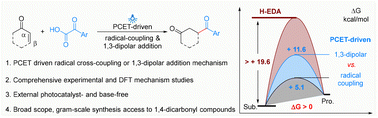
1,4-Dicarbonyl motifs are notoriously difficult to synthesize, yet the mechanistic underpinnings of conventional electron donor–acceptor (EDA) strategies remain contentious. Here, we unambiguously resolve this debate and disprove the hydrogen-bonding EDA (H-EDA) mechanism for decarboxylative acylation of activated alkenes with α-keto acids, establishing a concerted proton-coupled electron transfer (PCET) pathway as the exclusive operative mechanism. A combination of spectroscopic, electrochemical, photophysical, and computational studies provides definitive evidence against EDA/H-EDA formation and electron transfer, while DFT calculations revealed an exceptionally low activation barrier for concerted PCET (ΔG‡/ΔE‡ = 5.1–11.6 kcal mol−1), consistent with high efficiency under mild conditions. This photocatalyst- and base-free visible-light protocol enables rapid assembly of diverse 1,4-dicarbonyl compounds, with broad substrate scope, exceptional functional group compatibility, and reliable gram-scale synthesis. This work not only delivers a practically sustainable route to 1,4-dicarbonyls but also corrects a pervasive mechanistic misunderstanding in catalyst-free photodecarboxylation, laying a general mechanistic foundation for the rational development of visible-light-mediated transformations.
 Please wait while we load your content...


