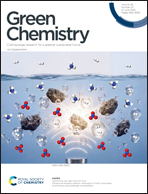
Sailing the Stormy Seas of Sustainability: Flow vs. Batch in API Synthesis

Abstract

Given the numerous improvements in the flow synthesis of Active Pharmaceutical Ingredients (APIs), this approach has garnered significant attention both from academia and industry. Flow chemistry can indeed shorten synthesis steps and/or reaction time, increase productivity, and generally lead to the creation of new intellectual property. Compared with batch processes, continuous-flow protocols may also facilitate solvent utilisation and often eliminate the need for intermediate isolation, thereby reducing process waste. These features naturally suggest improved sustainability, though it is often expressed more qualitatively than quantitatively. Herein, we systematically compared batch and flow methods for API synthesis. The comparison is based on multiple levels of quantification, including mass-related green metrics (E-factor and unified RME), solvent safety and hazards, as well as space-time-yield, offering a quantitative insight into this subject.

Supplementary files

Article information

Article type
Critical Review
Submitted
26 Mar 2026
Accepted
11 Jun 2026
First published
16 Jun 2026
This article is Open Access
Creative Commons BY-NC license

Green Chem., 2026, Accepted Manuscript

Sailing the Stormy Seas of Sustainability: Flow vs. Batch in API Synthesis

F. Ferlin, F. Valentini, F. Campana, X. Wei and L. Vaccaro, Green Chem., 2026, Accepted Manuscript , DOI: 10.1039/D6GC01852A

This article is licensed under a Creative Commons Attribution-NonCommercial 3.0 Unported Licence. You can use material from this article in other publications, without requesting further permission from the RSC, provided that the correct acknowledgement is given and it is not used for commercial purposes.

To request permission to reproduce material from this article in a commercial publication, please go to the Copyright Clearance Center request page.

If you are an author contributing to an RSC publication, you do not need to request permission provided correct acknowledgement is given.

If you are the author of this article, you do not need to request permission to reproduce figures and diagrams provided correct acknowledgement is given. If you want to reproduce the whole article in a third-party commercial publication (excluding your thesis/dissertation for which permission is not required) please go to the Copyright Clearance Center request page.

Read more about how to correctly acknowledge RSC content.

Social activity

Spotlight

Advertisements