


 PLATFORM UPDATE:

Enhanced photo-enzyme CO2 reduction using PEI-modified TPDE/SFN-FE photoenzyme composite catalysts
 *c
*c
Abstract
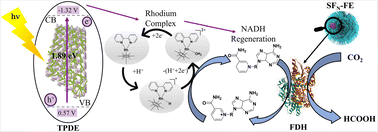
In the pursuit of carbon neutrality, enzymatic CO2 reduction offers high selectivity and efficiency under mild conditions. However, the poor stability and reusability of free enzymes limit practical applications. To address this issue, we developed a novel “two-in-one” photo-enzymatic system. Formate dehydrogenase (FDH) is immobilized on mesoporous silica nanoflowers (SFN) via electrostatic adsorption, improving enzyme stability and recyclability. Integrated with a PEI-modified diaminoanthraquinone covalent organic framework (TPDE), this system achieves efficient CO2 reduction under light, yielding formic acid at 5580 μmol g−1 h−1, outperforming most reported values. The electron transfer pathway was elucidated through rotating disk electrode analysis, demonstrating the preferential role of enzyme-mediated CO2 reduction over direct photoreduction. This study provides new insights into the dynamics of photo-enzymatic cascade systems and presents a promising strategy for sustainable CO2 conversion toward carbon neutrality.
 Please wait while we load your content...


