


 PLATFORM UPDATE:

Controlled release of chemically diverse small molecules from liquid-core capsules assembled under fully aqueous conditions

Abstract
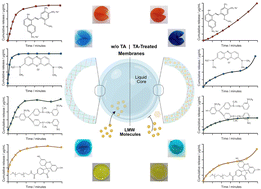
The production of most molecule-release systems, including those used in the pharmaceutical industry, typically depends on traditional organic-solvent methods or energy-intensive thermal processes. The use of water as a solvent, processed under mild environmental conditions, can provide a cleaner, safer, and more environmentally friendly fabrication option. However, the inherently large mesh size of typical hydrogels has hindered the effectiveness of carrier systems processed under fully aqueous conditions for the controlled delivery of small molecules, which comprise more than 90% of currently approved drugs. Here, we report the development of stable liquid-core capsules, made of two polyelectrolytes derived from renewable sources, alginate and ε-poly-L-lysine-, with the ability to modulate both the entrance and release of small hydrophilic molecules with diverse charge properties. The low permeability features of the capsules prepared with water as the sole solvent were imparted by a post-processing step with the natural polyphenol tannic acid. The role of capsule size in the release profile of small molecules was addressed: treated capsules with diameters of ca. 3 mm, as well as their miniaturized counterparts with ca. 600 μm, supported the delayed release of small molecules. Their control counterparts, on their turn, led to burst release profiles typical of large mesh size polymeric systems. The developed platform offers a fully aqueous route to engineer controlled release systems, with potential impact in applications that may benefit from the tailored delivery of small molecules, including drug administration, precision agriculture, and miniaturized reactors.
 Please wait while we load your content...


