


 PLATFORM UPDATE:

Development of an efficient poly(3-hydroxybutyrate) production platform from lignocellulosic hydrolysates using a robust Cupriavidus necator RXI22 strain
 d
and
Ja Kyong
Ko
*ac
d
and
Ja Kyong
Ko
*ac
Abstract
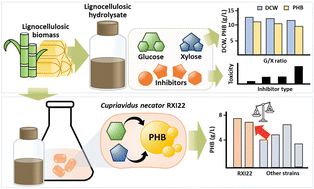
Lignocellulosic biomass represents a renewable and carbon-neutral feedstock for sustainable biomanufacturing of chemicals, fuels, and materials. In particular, microbial poly(3-hydroxybutyrate) (PHB) production from lignocellulosic hydrolysates offers a promising route toward reducing dependence on petroleum-based plastics and advancing circular bioeconomy strategies. The development of robust microbial hosts coupled with controllable bioprocessing is critical for efficient PHB production from lignocellulosic hydrolysates. In this study, efficient conversion of lignocellulosic hydrolysate sugar mixtures into PHB was established by using a genetically engineered Cupriavidus necator RXI22 strain as a microbial platform. C. necator RXI22, a glucose–xylose co-utilizer, exhibited relatively high cell density and PHB biosynthesis capabilities across diverse glucose–xylose ratios, underscoring its robustness toward the compositional variability inherent to lignocellulosic feedstocks. Systematic characterization of individual and combined hydrolysate-derived inhibitors further revealed that the key compounds limiting the fermentation performance are phenolic compounds, especially ferulic acid. When cultivated on hydrolysates from sugarcane bagasse and rice straw, C. necator RXI22 produced 6.1 and 7.0 g L−1 PHB, respectively, with yields of 0.29–0.30 g g−1, representing the highest performance reported to date under comparable conditions. The results highlight that C. necator RXI22 is compatible with various industrially relevant lignocellulosic feedstocks. To mitigate inhibitory stress, a simple nutritional drop-in strategy was implemented, accelerating biomass accumulation and enhancing PHB productivity under inhibitor-rich conditions. Overall, this study establishes C. necator RXI22 as a promising platform for sustainable lignocellulose-to-PHB bioprocessing and provides insights for advancing eco-efficient biomanufacturing.
- This article is part of the themed collection: Advanced Eco-Manufacturing and Sustainable Bioproducts with Lignocellulosic Biomass
 Please wait while we load your content...


