


 PLATFORM UPDATE:


Plastic waste boosted the plasma-assisted ammonia synthesis process from N2 and H2O
 *a
*a
Abstract
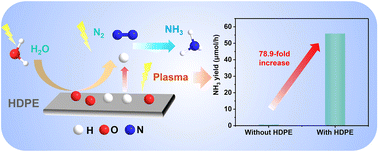
Sustainable ammonia (NH3) synthesis under moderate conditions, powered by renewable electricity and with reduced CO2 emissions, is a promising alternative to the energy-intensive Haber–Bosch process. In this work, we developed a non-thermal plasma (NTP) process that simultaneously realizes the synthesis of NH3 and the upcycling of high-density polyethylene (HDPE) waste with N2, H2O, and HDPE as feedstocks. A pronounced synergistic effect on NH3 yield was observed when HDPE was introduced. HDPE not only acted as a hydrogen donor but also as an oxygen scavenger to suppress H/O recombination, which led to an NH3 yield increase from 0.7 to 55.9 μmol h−1 under low N2 flow rate conditions, a 78.9-fold increase relative to the case without HDPE. This study offers a novel route for integrating low-carbon NH3 synthesis with plastic waste valorization, contributing to sustainable energy and waste management strategies.
 Please wait while we load your content...


