


 PLATFORM UPDATE:


Evaluating the sustainability of electrochemical CO2 capture technology through LCA and LCC: a winery industry application

Abstract
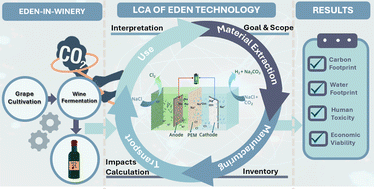
This study presents a comprehensive environmental and economic assessment of CO2 absorption using electrochemically produced NaOH for industrial decarbonization (e.g., the winery industry). The EDEN® technology, based on the chlor-alkali electrochemical process, achieved high CO2 capture efficiencies of up to 80%, with comparable performance when tested on pure CO2 and fermentation-derived CO2 streams (deviations <2%). Beyond capture, the system demonstrated multifunctionality by converting low-concentration waste brine (0.05–0.15 M) into hydrogen and chlorine while simultaneously fixing CO2 as sodium carbonate or bicarbonate. Under optimized operating conditions, faradaic efficiencies for hydrogen production reached 98–100%, with energy consumption values of 3.10 kWh kg−1 NaOH at 5.5 V and 4.36 kWh kg−1 NaOH at 6.5 V, highlighting the trade-off between kinetics and energy intensity. Life-cycle and techno-economic analyses modeled four EDEN® scenarios and benchmarked them against conventional column absorption using commercial NaOH. Net carbon savings were demonstrated, with scenario 2 (electroabsorption) recording the lowest impacts across all categories (e.g., −0.882 g CO2-eq. and 32 mLwater per g CO2 captured). Both carbon saving and capture costs were found to be highly sensitive to electricity carbon intensity. However, integration with renewable energy and the commercialization of co-products (H2, Cl2, Na2CO3) enabled capture costs to approach net-zero or even become negative. These findings underscore the significant climate-mitigation potential of electrochemical CO2 capture when integrated into industrial processes. By combining CO2 absorption with the co-production of valuable chemicals and hydrogen, EDEN® offers a scalable and versatile pathway toward environmentally and economically viable decarbonization, with direct applicability to the wine sector and broader industrial systems facing biogenic or process-related emissions.
 Please wait while we load your content...


