


 PLATFORM UPDATE:

Muconic acid: a renewable platform monomer for polymer materials

Abstract
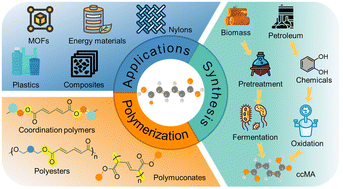
Future generations of polymers must not only originate from renewable feedstocks but also deliver tailored functionality and be conceived with intrinsic recyclability or environmentally benign end-of-life pathways. Muconic acid (MA), sourcing from abundant lignocellulosic biomass or industrial side streams through state-of-the-art microbial fermentation or chemo-catalytic routes, possesses a distinctive molecular architecture—comprising a conjugated diene alongside two carboxylic acid groups—that renders it a highly adaptable precursor for a broad spectrum of value-added monomers and polymeric materials. MA has a tremendous potential to serve as a renewable building block for conventional polymer families, as well as to enable entirely new green material architectures. While, the journey from sustainable MA production to the realization of commercially viable green materials entails systematic research across the entire value chain—from environmentally benign synthesis and efficient polymerization methodologies, to the properties and applications of the resulting polymers. In this review, the structure, sources, polymerization strategies of MA are described, its applications are assessed, and prospects for the development of advanced MA-based polymers materials are discussed.
- This article is part of the themed collections: 2026 Green Chemistry Reviews, Advanced Eco-Manufacturing and Sustainable Bioproducts with Lignocellulosic Biomass and 2026 Green Chemistry Hot Articles
 Please wait while we load your content...


