


From semiconductor diversity to mechanistic specificity: S-doped graphitic carbon nitride reprogramming metabolic pathways for bioplastic production
 †ab
Yuanpeng
Wang
*b
†ab
Yuanpeng
Wang
*b
Abstract
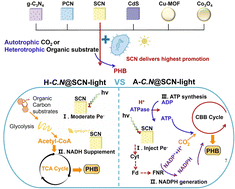
The integration of photocatalysts with microbial metabolic processes facilitates sustainable solar-driven biosynthesis. However, how photoelectron transfer regulates Cupriavidus necator (C.N) metabolism under heterotrophic versus autotrophic conditions remains unclear, thus restricting the rational design of dual-mode biohybrids for poly-3-hydroxybutyrate (PHB) production. Herein, C.N was meticulously coupled with six different semiconductors under illumination, followed by assessment of these constructed biohybrids for heterotrophic and autotrophic PHB production. Among them, S-doped g-C3N4 (termed SCN) exhibited the best performance towards heterotrophic PHB production, metabolizing 5.64 ± 0.68 g L−1 day−1 PHB along with a 208.2% improvement in yield. This enhancement is attributed to the marked biocompatibility and photocatalytic activity of SCN, enabled by its porous structure, narrowed band gap, and improved electrochemical response. Using the same SCN–C.N coupling strategy, autotrophic PHB production reached 58.12 ± 0.49 mg L−1 day−1, corresponding to a 267.7% increase in productivity. These results establish a dual-mode, metal-free photocatalytic biohybrid platform that operates with an identical catalyst–microbe pairing across both trophic regimes. To elucidate the underlying mechanism, transcriptomic analysis revealed a trophic-state-dependent metabolic reprogramming: heterotrophic PHB production relies primarily on glycolysis and the tricarboxylic acid cycle, whereas autotrophic PHB production is associated with photoelectron transport, oxidative phosphorylation, and CO2 fixation. Overall, this work clarifies SCN-driven pathway regulation for enhanced PHB biosynthesis and provides a viable green route that integrates high-productivity heterotrophic operation with low-carbon autotrophic operation within a unified abiotic–biotic platform, supporting deeper CO2-based decarbonization of bioplastic production.
 Please wait while we load your content...


