


Seawater-assisted biomass upgrading with stable catalytic activity for 1500 hours

Abstract
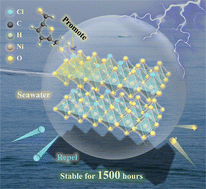
Amid the global energy transition and the drive toward carbon neutrality, converting biomass into high-value chemicals has become a key research priority. In particular, the electrocatalytic oxidation of bio-based 5-hydroxymethylfurfural (HMF) to 2,5-furandicarboxylic acid (FDCA) has garnered significant interest. Nickel-based catalysts show great promise for the HMF oxidation reaction (HMFOR). However, their practical application is limited by the complicated and environmentally unfriendly preparation procedures, as well as the stringent requirements for high-purity reagents and water. This study proposes a green synthesis strategy that integrates catalyst fabrication and biomass electrooxidation using natural seawater. By employing seawater as a hydrothermal corrosion medium, nickel foam (NF) is reconstructed into a highly efficient catalyst. The obtained NF-sw-120 electrode delivers outstanding performance in an alkaline seawater electrolyte, achieving a FDCA yield of 97.5% and a faradaic efficiency (FE) of 97.6%. Moreover, it exhibits exceptional stability after continuous electrolysis for 1500 hours. Mechanistic investigations reveal that seawater simultaneously suppresses the competing oxygen evolution reaction (OER) while promoting the HMFOR, leading to higher current density and improved energy efficiency. This work provides a sustainable and cost-effective route for fabricating high-performance biomass electrocatalytic materials.
 Please wait while we load your content...


