


 PLATFORM UPDATE:


Sustainable water purification: life cycle trade-offs in carbon-based catalyst design

Abstract
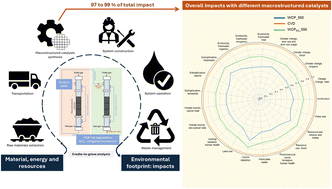
This study evaluates the environmental performance of carbon-based macrostructured catalysts developed for advanced drinking water treatment applications. A novel two-stage catalytic system, comprising ozonation and hydrogenation, was assessed using the Life Cycle Assessment (LCA) methodology, considering three synthesis approaches: traditional Chemical Vapor Deposition (CVD), and two washcoating methods using Triton X-100 or sodium alginate as dispersants. While all catalysts achieved similar pollutant removal efficiencies, LCA results revealed significantly lower environmental impacts for washcoated catalysts compared to CVD, with the TX-100 method showing the lowest total burden. Key impact contributors included energy-intensive thermal treatments and raw material choices, particularly palladium for the synthesis of bimetallic catalysts. This work represents the first LCA applied to an integrated water treatment process focused on heterogeneous catalysis, as well as the first comparative LCA of different methodologies for the synthesis of macrostructured catalysts. The combination of LCA with experimental lab-scale synthesis data and the Safe-and-Sustainable-by-Design (SSbD) framework makes this study unique and among the first to adopt such an approach in this research area. The analysis highlights opportunities to optimise synthesis protocols for improved sustainability and supports the integration of SSbD principles in water treatment technologies.
 Please wait while we load your content...


