


 PLATFORM UPDATE:


Engineering nickel catalysts with atomic-sulfur-stabilized thiolate adlayers for durable selectivity in hydrogenation of halonitrobenzenes

Abstract
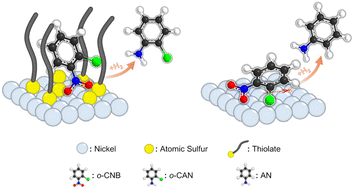
The development of non-noble Ni catalysts for the selective hydrogenation of halonitrobenzenes offers an attractive and cost-effective industrial strategy for synthesizing functionalized anilines, yet complete and durable suppression of undesired hydrodehalogenation remains a significant challenge towards atom-efficient and environmentally benign processes. Herein, we report an effective strategy for engineering durable Ni catalysts that effectively suppress hydrodehalogenation during the hydrogenation of o-chloronitrobenzene (o-CNB), in which Ni catalytic sites are controllably chelated with atomic-sulfur-stabilized thiolate adlayers through thermally induced thiolate modification. The optimized catalyst demonstrates exceptional durability, maintaining >99.9% yield of o-chloroaniline (o-CAN) over prolonged reaction times and surviving over 12 recycling tests. Combined characterization and simulations reveal that both steric and electronic effects are introduced to boost the catalytic performance, selectively inhibiting flat-lying o-CNB adsorption while atomic sulfur plays a crucial role in stabilizing the thiolate adlayers. This work establishes a general paradigm for designing durable, highly selective catalysts with enhanced sustainability and potential for green chemical synthesis.
 Please wait while we load your content...


