


 PLATFORM UPDATE:


Facile fractionation of spent coffee grounds into sustainable aviation fuel-relevant streams using methanol and potential endogenous alcohol–glycerol solvent mixtures

Abstract
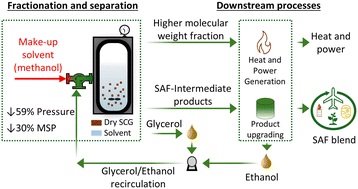
Spent coffee grounds (SCG), an abundant lignocellulosic biomass waste, offer potential for sustainable aviation fuels (SAF) production due to their major components of carbohydrates (50%), lignin (30%), and lipids (8%), with efficient fractionation being the main challenge. This study presents an alcohol-based solvolysis strategy for deconstructing SCG into SAF-relevant fractions while enabling the use of ethanol and glycerol as endogenous co-solvents. Methanol solvolysis achieved high retentions of glucan (99.5% at 180 °C and 98.0% at 200 °C), mannan (99.0% at 180 °C and 79.0% at 200 °C), and galactan (93.0% at 180 °C and 78.0% at 200 °C), with delipidification (>95.0%) and delignification (>52.0%). The ethanol/glycerol (1 : 1 v/v) co-solvent at 200 °C demonstrated comparable glucan and mannan retentions of 88.0% and 76.0%, with delignification (67.0%) and delipidification (93.0%). All tested solvent systems yielded a combined 61–66 wt% of SAF-convertible lipid, lignin, and carbohydrate fractions, each suitable for direct integration into established catalytic upgrading pathways. Despite the comparable fractionation efficiency, the endogenous solvent systems reduced autogenous pressure to 15.6 bar, 59% lower than neat methanol solvolysis, enabling safer, more energy-efficient biorefinery operation. Techno-economic analysis shows superior performance for co-solvent systems, with ethanol/glycerol achieving a minimum selling price (MSP) of $1.43 per kg and methanol/glycerol achieving $1.64 per kg, which are 30% and 20% lower than methanol solvolysis ($2.05 per kg) while delivering enhanced solvent circularity and operational safety.
- This article is part of the themed collection: Advanced Eco-Manufacturing and Sustainable Bioproducts with Lignocellulosic Biomass
 Please wait while we load your content...


