


Replacing low-boiling-point amines: electrocatalytic phosphinamide synthesis with liquid formamide reagents
 *ab
Changqun
Cai
b
*ab
Changqun
Cai
b
Abstract
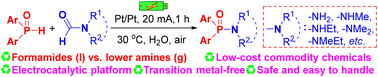
Phosphinamides, featuring a characteristic N–P(O) skeleton, are privileged structures in pharmaceuticals and functional materials. However, traditional synthetic methods often rely on moisture-sensitive PCl reagents, toxic halogens, or expensive transition-metal catalysts. Herein, we report an electrocatalytic strategy for the straightforward synthesis of phosphinamides via the oxidative cross-coupling of diarylphosphine oxides with formamide derivatives. This protocol employs inexpensive and safe formamides (e.g., DMF) as both the solvent and amine source, effectively circumventing the handling challenges associated with gaseous and foul-smelling lower alkyl amines. This metal- and external-oxidant-free method operates under mild conditions, offering a practical and versatile platform for the green synthesis of diverse phosphinamide derivatives. Quantitative assessment of green chemistry metrics revealed a high atom economy (AE, 89.1%) and a satisfactory efficiency (FE, up to 39.5%), highlighting the environmental merits of this approach.
 Please wait while we load your content...


