


 PLATFORM UPDATE:


Record-high biotin production in Pseudomonas mutabilis via multi-strategy metabolic engineering and BioB redesign
 *ad
and
Zhinan
Xu
*a
*ad
and
Zhinan
Xu
*a
Abstract
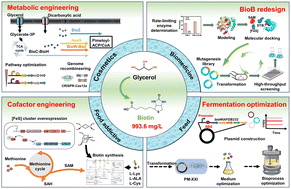
Biotin (vitamin B7/H), a water-soluble member of the B-vitamin family, is widely used in the food additive, cosmetics, feed, and pharmaceutical industries. Current industrial biotin production relies entirely on multi-step chemical synthesis that requires harsh conditions and generates toxic byproducts. Here, we established a sustainable and environmentally friendly biosynthetic route to biotin by systematically engineering Pseudomonas mutabilis. Four strategies were implemented: (1) dual-channel overexpression of recombinant biotin biosynthetic gene clusters through combined chromosomal integration and plasmid expression; (2) introduction of heterologous BioZ, BioW–BioI, and AasS modules to enable de novo synthesis of the precursor pimeloyl–ACP/CoA from supplemented dicarboxylic acids; (3) cofactor engineering to enhance intracellular availability of iron–sulfur clusters and S-adenosyl-L-methionine; and (4) semi-rational redesign of the rate-limiting enzyme BioB, in which the K232R mutant exhibited a 42.3% improvement in catalytic efficiency for converting dethiobiotin to biotin. The resulting engineered strain, PM-XXI, produced 174.3 mg L−1 biotin in shake-flask cultivation, representing a 197.5-fold increase over the parent strain, and achieved a record titer of 993.6 mg L−1 in 10 L fed-batch fermentation using glycerol as the sole carbon source supplemented with 0.5 g L−1 dicarboxylic acid. This work establishes a green, scalable, and resource-efficient microbial platform that replaces energy-intensive chemical synthesis, demonstrating the potential of microbial cell factories for sustainable vitamin manufacturing aligned with the principles of green chemistry.
 Please wait while we load your content...


