


 PLATFORM UPDATE:

Cascading integration of genetically reduced cellulose nanofibers and ultrasound-dissected fungi mycelium for the synergistic enhancement of cellulases and saccharification with high-value bioproducts

Abstract
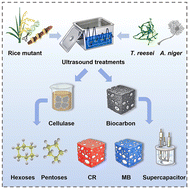
Plants provide enormous convertible biomass resources for biofuels and bioproducts, but the recalcitrant nature of lignocellulose presents a critical difficulty in achieving optimal enzyme complexes that are universally capable of diverse biomass saccharification. In this study, lignocellulose-degradation enzymes were obtained with high activity and high yield by the application of optimized ultrasound treatment for two distinct fungi (T. reesei and A. niger) incubations with desired rice mutant straws. The approach enabled a characteristically synergistic enhancement for biomass saccharification of three representative bioenergy plants (eucalyptus, fern, and rice), with yields of hexoses increased up to 7.7 folds. All retained residues of digested lignocelluloses and dissected mycelium were directly used as active biosorbents for Congo red (CR) and methylene blue (MB), with adsorptions of 165.6 mg g−1 and 184.8 mg g−1, respectively. They could also be converted into highly porous biocarbon materials with further upgraded dye adsorptions of 2766.3 mg g−1 (CR) and 491.5 mg g−1 (MB) and with a 2-fold improved specific capacitance. A mechanism model is thus proposed to illustrate how the integration of genetically engineerable plant lignocelluloses with ultrasound-dissectible fungi mycelium can enhance cellulase secretion and biomass saccharification, thereby contributing to a sustainable bioeconomy through green-like biomass processes.
 Please wait while we load your content...


