


 PLATFORM UPDATE:


Glycerol-enabled glycolysis of TDI-based polyurethane foams for selective recovery of aromatic diamines

Abstract
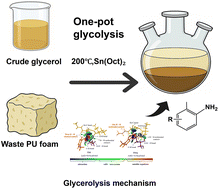
Polyurethanes (PU) are difficult to recycle because of their thermoset-like cross-linked structure and robust urethane linkages, yet they contain both polyols and aromatic diamine precursors that are attractive targets for circular valorization. Glycerol-based glycolysis of PU has been reported previously, mainly with an emphasis on polyol recovery, whereas the composition and potential of the diamine-rich lower phase have remained insufficiently characterized. Here, we combine product speciation, phase-behavior analysis, and density functional theory (DFT) calculations to elucidate why glycerol is particularly effective at driving TDI-based PU foams toward high-yield aromatic diamine recovery. Under tin catalysis at 200 °C and 1 atm N2, glycerol mediates efficient depolymerization of model and commercial TDI-based foams, affording near-quantitative toluenediamine (TDA) yields in the lower phase together with a polyether-polyol-rich upper phase. Comparative experiments with diethylene glycol and a series of C5 alcohols show that glycerol uniquely combines high overall PU conversion with markedly enhanced TDA selectivity. DFT calculations indicate that secondary-hydroxyl participation lowers the rate-determining barrier relative to typical diols. Using crude glycerol as both reagent and reaction medium, kilogram-scale glycolysis of waste car seat cushions affords a diamine-rich lower phase and a polyether-polyol-rich upper phase that closely match the speciation trends observed at bench scale, demonstrating a diamine-targeted, mechanistically guided alternative to existing polyol-centric glycolysis processes.
 Please wait while we load your content...


