


 PLATFORM UPDATE:


Can deep eutectic systems and algae deliver sustainable bioactives and nutrients? A systematic review

Abstract
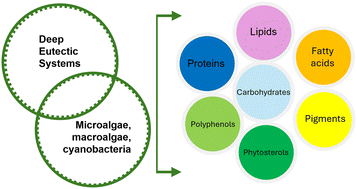
The growing demand for sustainable extraction approaches has positioned deep eutectic systems (DESs) as promising, and often greener, alternatives to conventional solvents for valorizing algal and cyanobacterial biomass. This systematic review, supported by quantitative data integration and multivariate statistical analysis, analyzes peer-reviewed studies on the recovery of proteins, carbohydrates, lipids, fatty acids, phytosterols, polyphenols, and pigments from microalgae, macroalgae, and cyanobacteria, and highlights the main challenges in applying DESs to biomass processing. To ensure comparability, extraction conditions, DES composition, biomass origin, and assisted extraction techniques were systematically examined, with results normalized across studies. Hydrophilic DESs, typically based on choline chloride, sugars, or glycerol, generally show high efficiency for proteins and phycobiliproteins, whereas hydrophobic systems derived from fatty acids or terpenes favor the extraction of lipids and lipophilic pigments. However, water content, viscosity, and biomass-solvent interactions can significantly modulate these trends, and deviations are reported. Ultrasound-assisted extraction is among the most frequently employed techniques to enhance DES extraction. Principal component analysis revealed clear clustering of algal species and DES formulations according to compound class, confirming polarity-driven selectivity for specific macronutrients, pigments and phenolics. Beyond selective extraction, DESs and natural DESs (NADESs) support biomass pretreatment and stabilization, and can mitigate off-flavors and odors, thus reducing both energy and solvent consumption while aligning with circular-economy principles. Although further research is required to address scalability and standardization, DES-based algal processing holds strong potential as a practical and sustainable route to producing functional ingredients.
- This article is part of the themed collections: 2026 Green Chemistry Reviews and Green Liquids and Solvents
 Please wait while we load your content...


