


 PLATFORM UPDATE:


Exploring the robust engineered ω-transaminase for manufacturing biobased amines from biomass-derived aldehydes
 *ab
and
*ab
and
Abstract
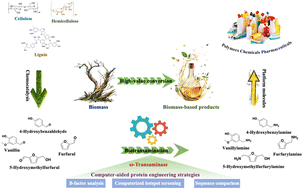
The sustainable synthesis of bio-based amines from renewable resources remains a major challenge due to the recalcitrance of lignocellulosic biomass and the limited stability and substrate scope of existing biocatalysts. In this study, an integrated chemobiocatalytic cascade was established for the synthesis of bio-based amines by combining deep eutectic solvent (DES)-mediated pretreatment with engineered transaminase biocatalysis. Three computer-aided protein engineering strategies were applied to generate a high-performance ω-transaminase mutant from Aspergillus terreus (AtTA), HNILQEND, featuring four interfacial mutations (I77L, Q97E, H210N, and N245D). The engineered HNILQEND displayed a 4.8-fold improvement in substrate tolerance and significantly extended half-lives (12.5-fold at 35 °C and 5.8-fold at 50 °C) compared to the wild type. Structural characterization through crystallography, molecular docking, and molecular dynamics simulations revealed that enhanced electrostatic interactions, strengthened hydrogen-bonding networks, and loop repositioning contribute to improved substrate-cofactor alignment and thermal robustness. The engineered variant was applied in a whole-cell form for the bioamination of furfural and 5-hydroxymethylfurfural derived from corncob and bread waste, respectively. Using corncob and bread crumbs as feedstocks, the process achieved productivities of 0.14 kg furfurylamine/kg corncob and 0.42 kg 5-hydroxymethylfurfurylamine/kg bread crumbs. In addition, the variant displayed high activities toward structurally diverse lignin-derived aldehydes, thereby expanding the substrate spectrum and functional versatility of ω-transaminases in biomass valorization. The integration of rational enzyme engineering, whole-cell catalysis, and DES-assisted chemocatalysis highlights the potential of chemobiocatalytic cascades for the cleaner production of sustainable chemicals from hemicellulose, cellulose and lignin in biomass.
 Please wait while we load your content...


