


 PLATFORM UPDATE:


Electrocatalytic dechlorination of polyvinylidene chloride for tandem dual radical-driven synthesis of β-chloroalcohols

Abstract
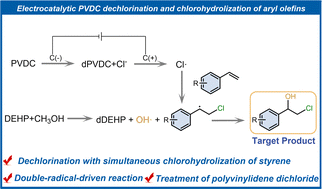
Polyvinylidene chloride (PVDC) is widely employed in packaging and construction materials due to its high chemical stability and excellent barrier performance. However, its persistent nature results in significant environmental accumulation, posing ecological risks. Conventional treatment methods often generate highly toxic byproducts, leading to the waste of chlorine resources. To address these challenges, this study introduces a novel electrochemical approach for the resource recovery of PVDC. Using PVDC as a chlorine source and di(2-ethylhexyl)phthalate (DEHP) as an electron mediator, we achieved the coupling of electrochemical dechlorination of PVDC with the synthesis of β-chloroalcohols. The halogenated alcohol derivatives were obtained in yields up to 76%, with good substrate versatility encompassing styrene derivatives bearing various functional groups as well as certain cyclic olefins. Moreover, the methodology was successfully applied to commercially available PVDC products, affording the target compounds in approximately 50% yield. This work offers a novel strategy for the sustainable recycling and valorization of plastic waste.
 Please wait while we load your content...


