


 PLATFORM UPDATE:


Machine learning guidelines for designing next-generation nanocomposite membranes for CO2 capture

Abstract
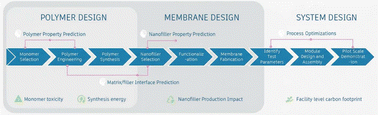
Since the industrial revolution, atmospheric carbon dioxide (CO2) levels have risen by approximately 40%, underscoring the urgent need for efficient and scalable carbon capture technologies. Conventional absorption and adsorption methods, while effective, are hindered by high energy demands and corrosion-related challenges. Membrane-based CO2 separation offers a promising low-energy, low-footprint alternative; however, polymeric membranes are fundamentally constrained by the permeability–selectivity trade-off, as defined by the Robeson Upper Bound, limiting their optimization through traditional empirical methods. This proposal critically explores the transformative role played by machine learning (ML) in accelerating the design and development of advanced polymer nanocomposite membranes for CO2 capture and conversion, highlighting the recent advances in integration of ML techniques such as Random Forests, Gaussian Process Regression, and Artificial Neural Networks for rapid property prediction, material screening, and performance optimization, in addition to the data pre-processing requirements and model validation techniques. The review also sheds light on the environmental impact associated with fabrication of nanocomposite polymeric membranes as well as the carbon footprint of ML computational energy. Despite prevailing challenges, including limited high-quality datasets, model interpretability, and scalability concerns, ML-assisted approaches demonstrate exceptional promise for reducing development timelines from months to hours while surpassing conventional design limitations. We conclude that ML integration is not only advantageous but essential for advancing next-generation membranes that are both high-performing and industrially viable, paving the way for sustainable and efficient CO2 capture at scale.
- This article is part of the themed collection: 2026 Green Chemistry Reviews
 Please wait while we load your content...


