


 PLATFORM UPDATE:


A multi-enzyme cascade coupled with electrochemistry for efficient synthesis of l-lactate from carbon dioxide

Abstract
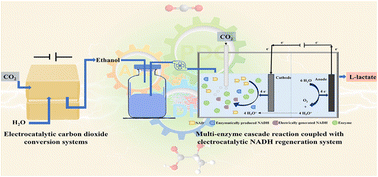
L-Lactate is a basic chemical that is widely used in the fields of food, chemistry, and materials. Most of the L-lactate is produced through microbial fermentation using food crops as feedstock materials, which exacerbates the crisis of food shortage. Recently, the utilization of carbon dioxide (CO2) as a basic feedstock for the synthesis of important chemicals has presented a feasible and promising material production mode. However, the existing enzyme-catalyzed synthesis remains challenging due to the additional use of expensive NADH and low substrate conversion efficiency. Herein, a multi-enzyme cascade system was constructed to synthesize L-lactate from ethanol and CO2 without adding NADH. The feasibility of this system was demonstrated by thermodynamic calculations and experiments, and it was found that the key enzyme in this cascade reaction is pyruvate decarboxylase (PDC). A high-activity PDC mutant was screened by random mutation, and it resulted in an increase in the production of L-lactate by 2.94-fold. Following this, a stable electro-enzymatic coupling platform was established by coupling the multi-enzyme cascade system with electrochemistry for effective regeneration of NADH, which resulted in an increase in the production of L-lactate by 18%. Finally, the synthesis of L-lactate was further improved by incorporation of [CH][His] as solvent to increase the CO2 solubility, and the production of L-lactate was up to 4.14 mM. To further validate the performance of the system, scale-up production was performed. Using 50 mM ethanol as the substrate, 22.5 mM (2.03 g L−1) L-lactate was successfully synthesized. This study not only provides an efficient strategy for L-lactate synthesis but also enables the resourceful utilization of non-food feedstocks such as ethanol and CO2.
 Please wait while we load your content...


