


 PLATFORM UPDATE:


The complex interplay of chemo- and bio-catalysis for one-pot oxidation cascades – indole oxidation in focus

Abstract
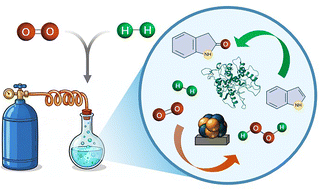
The combination of chloroperoxidase (CPO), derived from the marine fungus Caldariomyces fumago, in combination with supported AuPd nanoalloys, has been demonstrated as a highly efficient one-pot system for the selective oxidation of indole to 2-oxindole. Peroxy-enzymatic oxygen transfer is driven via chemo-catalytic in situ H2O2 generation from H2 and O2 over AuPd surfaces, with the continuous supply of the oxidant at low-concentration essential in maintaining enzymatic activity. Indeed, coupling CPO and an optimised 1% Au1Pd1/TiO2 formulation achieved 33 000 TTN for indole oxidation, which is among the highest reported when compared to alternative systems utilizing in situ generated H2O2, including electrochemical and co-enzymatic approaches. Exceptional tandem performance has been achieved upon adopting a holistic approach toward design and optimisation of the system, thus deconvoluting the complex array of parameters governing chemo- and bio-catalytic performance under operational conditions; including metal nanoparticle speciation, morphology, electronic structure, and leaching, in addition to enzyme deactivation and in situ physisorption. We consider such an approach to offer a case study and guide to the community, facilitating efficient optimisation of complex chemo-enzymatic systems for potential industrial applications.
 Please wait while we load your content...


