


 PLATFORM UPDATE:


Direct conversion of bicarbonate capture solution into multi-carbon products in a plasma electrochemical system

Abstract
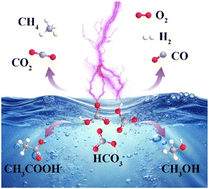
Atmospheric CO2 capture has become an increasingly important industrial process in response to climate challenges. Conventional CO2 capture processes often require an energy-intensive step to regenerate the capture solution, typically a (bi)carbonate solution. Developing new chemical processes that directly convert the capture solution can bypass this energy-demanding regeneration step and yield valuable multi-carbon products. This study introduces a hybrid nonthermal plasma–electrochemical system that enables the direct conversion of bicarbonate molecules into ethylene in high yield. The captured bicarbonate solution is activated directly by solvated electrons and radical species generated from the plasma. The effects of counter cations in the HCO3− solution and carrier gas in the plasma reactor on the composition of plasma-activated intermediates, including O2, H2, CO, CO2, and CH4, were examined using NMR and GC/MS analyses. These mixed plasma-activated gaseous products, containing up to 73.5 vol% CO and CO2, were subsequently introduced into an electrolyzer, achieving a C2+ faradaic efficiency of 83.7% at 200 mA cm−2 with 59.5% ethylene selectivity. This approach demonstrates the direct transformation of carbon capture solutions into high-yield C2+ products and establishes a platform for the chemical activation of otherwise inert molecules.
- This article is part of the themed collection: Green Chemistry Emerging Investigators Series
 Please wait while we load your content...


