


 PLATFORM UPDATE:


Lifecycle cost, environmental, and machine-learning value assessment for synthetic spider silk production from E. coli

Abstract
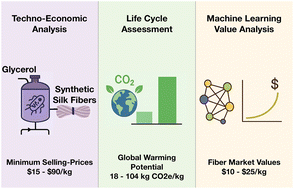
Synthetic spider silk biomaterials with exceptional strength and thermal resistance have attracted growing interest for various applications, including the textile and medical industries. Natural spider silk production relies on farming spiders, which poses technical, economic, environmental, and ethical challenges. Synthetic spider silk offers an alternative path to high-quality silk materials. However, there is limited information on the costs and environmental benefits of synthetic spider silk. This study employs techno-economic analysis (TEA) and life cycle assessment (LCA) to evaluate the economic feasibility and environmental impact of large-scale synthetic spider silk manufacturing. Experimental data are based on Escherichia coli (E. coli) to produce recombinant spider silk proteins. A commercial-scale fiber production facility was simulated in BioSTEAM. Environmental impacts were assessed using OpenLCA. Our findings reveal that the production of synthetic spider silk can achieve a minimum sale price of 14.96 USD to 87.8 USD per kilogram, with associated greenhouse gas emissions (GHG) of 17.39 to 104.11 kg CO2e per kilogram. The machine learning analysis indicates that synthetic fiber market values could range between 5 and 25 USD per kilogram. Sensitivity analysis indicates that fiber yield, glycerol, and urea are the most important economic and environmental factors. Synthetic spider silk could become a competitive and environmentally friendly material for various industries by optimizing production processes for greater fiber yield and identifying novel raw materials.
 Please wait while we load your content...


