


 PLATFORM UPDATE:


Protein dynamics-assisted engineering of a selective debenzylase for replacing Pd/C-catalyzed debenzylation in statin precursor synthesis
 ac
and
Yijun
Chen
*abc
ac
and
Yijun
Chen
*abc
Abstract
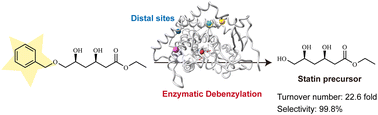
Statins, leading cholesterol-lowering drugs, contain a pivotal pharmacophore side chain. However, the Pd/C-catalyzed debenzylation step in the side chain production poses a series of cost and environmental issues. In this study, an efficient debenzylase is generated from the engineering of CYP102A1 to replace the tedious and harmful chemical debenzylation. The engineering process for the debenzylase is primarily enabled by continuous dynamic protein conformational alteration-guided mutagenesis, a newly developed protein dynamics-based strategy to facilitate the prediction of the key residues of both proximal and challenging distal sites, for the improvement of activity and selectivity. Through iterative combinatorial mutagenesis, the best mutant exhibits a 22.6-fold improvement in the total turnover number and an increase in the debenzylating selectivity from 12.2% to 99.8%. Furthermore, the practical value of the debenzylase is demonstrated by incorporating a diketoreductase-mediated synthetic route through an enzymatic cascade reaction to produce an advanced precursor of statins. This study not only establishes the first enzymatic alternative to the removal of the widely used benzyl group in organic synthesis but also paves the way for accelerating enzyme engineering in a rational manner.
 Please wait while we load your content...


