


 PLATFORM UPDATE:


Fallen-leaf-sensitized biosolar oxygenation of hydrocarbons

Abstract
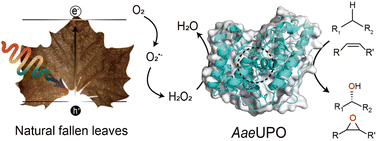
Lignocellulosic wastes are naturally abundant carbon resources but have been underutilized due to their complex structure and recalcitrant nature. They require energy- and water-intensive processes, such as thermal, chemical, and/or mechanical pretreatments, for their valorization. Here, we report a new function of raw tree waste for driving the solar-powered oxygen reduction reaction (ORR) and biocatalytic oxyfunctionalization of hydrocarbons. We reveal that various lignocellulosic wastes, such as fallen leaves, waste wood, and wastepaper, can produce hydrogen peroxide (H2O2) using only O2, water, and light without any pretreatment. In particular, fallen leaves from Platanus trees exhibit high rates of ORR, which is ascribed to their superior photophysical properties, such as higher light extinction, longer charge relaxation lifetime, and lower electron transfer resistance. We treated the fallen leaves of Platanus with H2O2-dependent unspecific peroxygenase to produce optically pure alcohols and epoxides through the stereoselective hydroxylation and epoxidation of hydrocarbons. The waste-enzyme hybrid catalyst achieved record-high turnover frequency and total turnover number. This study establishes raw biomass wastes as green photocatalysts for sustainable photobiosynthesis, presenting a successful example of waste-to-wealth conversion.
 Please wait while we load your content...


