


 PLATFORM UPDATE:


Tibetan kefir grain-fermented milk attenuates DSS-induced colitis through coordinated regulation of intestinal barrier function, inflammation, and gut microbiota
 *a
*a
Abstract
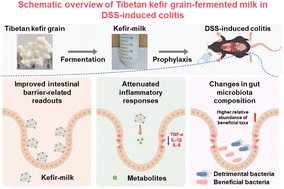
This study evaluated the prophylactic efficacy of Tibetan kefir grain-fermented milk (Kefir-milk) in a dextran sulfate sodium (DSS)-induced colitis model and examined host- and fermentation-related changes associated with the intervention. Kefir-milk pretreatment attenuated disease activity, reduced colon shortening, and alleviated histopathological injury. These changes were accompanied by improved intestinal barrier-related readouts, including higher expression of ZO-1, Occludin, and MUC2, together with lower colonic MPO, TNF-α, IL-1β, and IL-6 levels. 16S rRNA profiling showed improved α-diversity, partial restoration of overall community structure, enrichment of Muribaculaceae and other genera commonly linked to intestinal homeostasis, and suppression of Escherichia-Shigella. Shotgun metagenomics indicated that the final Kefir-milk matrix was dominated by Lactobacillus-related taxa, while untargeted UPLC-HRMS/MS metabolomics revealed broad fermentation-associated remodeling of the milk metabolome, including altered relative abundances of features annotated as hippuric acid, p-cresyl sulfate, leucic acid, and phenyllactic acid. In LPS-challenged RAW264.7 macrophages, sterile filtered water-soluble extracts from Kefir-milk modulated polarization-associated marker expression and reduced pro-inflammatory cytokine responses at both transcript and protein levels. Collectively, these findings indicate that Kefir-milk attenuated DSS-induced colitis under the present experimental conditions and was associated with concurrent changes in barrier-related markers, gut microbiota, and the milk metabolome.
 Please wait while we load your content...


