


 PLATFORM UPDATE:


Marine phlorotannin Trifuhalol A coordinately regulates endothelial nitric oxide signaling and ACE activity to maintain vascular homeostasis

Abstract
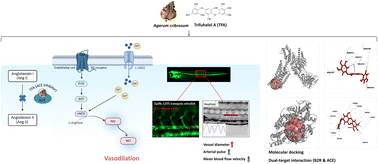
Hypertension and vascular dysfunction are closely linked to endothelial nitric oxide (NO) deficiency and dysregulation of the renin–angiotensin and kallikrein–kinin pathways. In this study, the vascular health-related biofunctionality of Trifuhalol A (TFA), a phlorotannin isolated from the edible marine brown alga Agarum cribrosum (A. cribrosum), was evaluated using cellular and zebrafish models. In EA.hy926 endothelial cells, TFA showed high biocompatibility and significantly increased intracellular NO production and cytosolic Ca2+ levels, accompanied by increased B2R protein expression and activation of the phosphoinositide 3-kinase/protein kinase B/endothelial nitric oxide synthase (PI3K/AKT/eNOS) signaling axis at the mRNA and protein levels. In Tg(flk1:EGFP) zebrafish larvae, TFA alleviated phenylephrine (PE)-induced vasoconstriction by increasing dorsal aorta diameter and improving hemodynamic indices, including arterial pulse and mean blood-flow velocity, and these effects were accompanied by increased p-eNOS/eNOS expression in vivo. TFA also inhibited angiotensin-converting enzyme (ACE) activity in a concentration-dependent manner. Molecular docking simulations suggested that TFA can be accommodated within the binding pockets of the bradykinin B2 receptor (B2R; PDB ID: 7F2O) and ACE, providing a plausible structural basis for dual pathway modulation. Taken together, these results suggest that the marine dietary phlorotannin TFA may modulate endothelial NO bioavailability and ACE activity through complementary molecular mechanisms, highlighting its potential as a bioactive component for the development of functional foods and nutraceutical strategies aimed at maintaining vascular homeostasis.
 Please wait while we load your content...


