


 PLATFORM UPDATE:


Cyanidin and delphinidin inhibit transglutaminase 2 and mitigate inflammatory effects of IFN-γ and TNF-α by molecular interaction
 *ab
Anika E.
Wagner
bc
and
*ab
Anika E.
Wagner
bc
and
Abstract
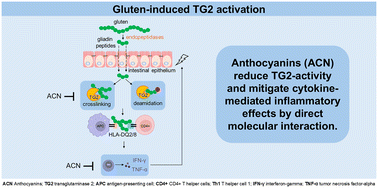
Enzymatic modification of gliadin peptides by calcium-dependent transglutaminase 2 (TG2) plays a central role in the pathogenesis of celiac disease (CD) and is considered a potential therapeutic target. Recently, anthocyanins (ACN) such as cyanidin-3-glucoside (C3G) and delphinidin-3-glucoside (D3G) have gained attention in CD research for their anti-inflammatory, antioxidant and gliadin-binding properties. This study examined whether C3G and D3G modulate TG2 activity and cytokine-induced inflammation in human intestinal cells. TG2 activity was analyzed using gliadin substrates and TG2 expression was assessed after IFN-γ and TNF-α stimulation. Cell viability after ACN, IFN-γ and TNF-α incubation was tested with a resazurin-based fluorometric assay. Docking and STD-NMR experiments were conducted to explore the molecular interactions involved. D3G significantly reduced TG2-mediated crosslinking of gliadin and C3G of 5-biotinamidopentylamine as a synthetic substrate of TG2. STD-NMR and in silico docking experiments revealed a molecular interaction of ACN with calcium binding sites of TG2 which are essential for its enzymatic function. In addition, C3G and D3G improved cell viability under IFN-γ and TNF-α exposure and D3G reduced upregulation of TG2 mRNA under IFN-γ stimulation. Here, in silico docking experiments suggested that both ACN may interact with the assembly of cytokines and their corresponding cellular receptors. In conclusion, our data indicates that C3G and D3G reduce TG2-activity and mitigate cytokine-mediated inflammatory effects by a direct molecular interaction. This supports their potential as natural modulators of TG2 in the context of CD.
- This article is part of the themed collection: FBHC 2025 - 5th International Conference on Food Bioactives & Health Special Collection
 Please wait while we load your content...


